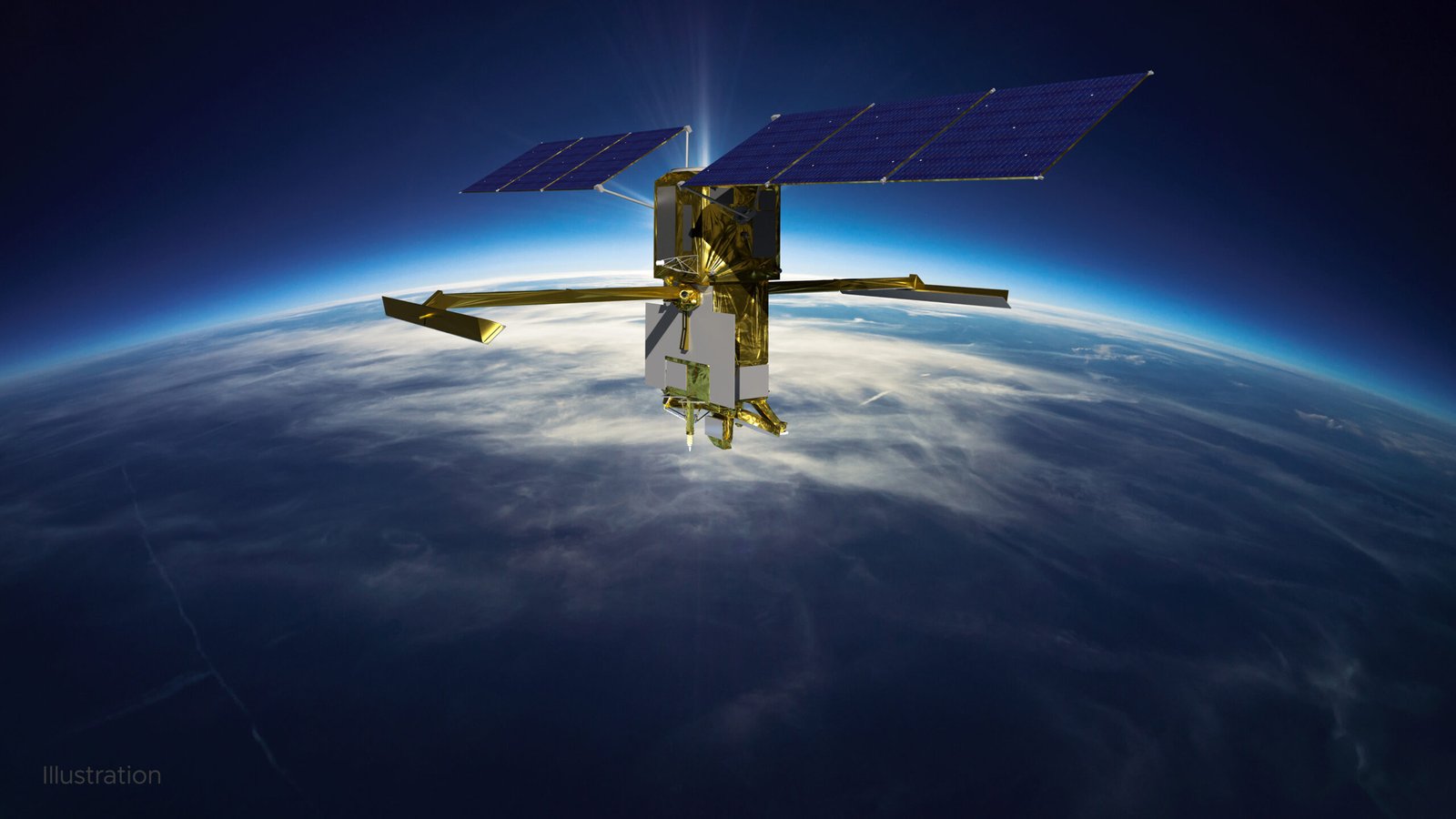
Imagine standing by a vast river, watching the water flow endlessly, carrying secrets of the planet’s health with every ripple. I’ve always been fascinated by water—growing up near the Great Lakes, I spent summers skipping stones and wondering where all that water came from and where it was headed. But as an environmental journalist who’s covered everything from droughts in California to floods in the Midwest, I’ve seen firsthand how climate change is messing with our water systems. That’s why NASA’s Surface Water and Ocean Topography (SWOT) satellite feels like a personal breakthrough—it’s not just tech in space; it’s a lifeline for understanding and fighting back against a warming world.
This satellite, launched in late 2022, is mapping Earth’s water like never before, revealing tiny ocean currents and tracking freshwater levels in real-time. It’s been dubbed a “game changer” by experts because it fills massive gaps in our knowledge, helping predict everything from sea level rise to drought patterns. In this deep dive, we’ll explore how SWOT works, its impacts on climate science, and why it’s essential for our future. Buckle up— we’re about to splash into some seriously cool science.
What is the SWOT Satellite?
The SWOT satellite is a joint mission between NASA and the French space agency CNES, with support from Canadian and UK space agencies, designed to survey nearly all of Earth’s surface water. It’s about the size of an SUV and orbits at around 890 kilometers above us, scanning oceans, lakes, rivers, and reservoirs with unprecedented detail. Think of it as a cosmic water detective, spotting changes that ground-based tools often miss.
Mission Objectives
At its core, SWOT aims to measure water heights to understand how oceans absorb heat and carbon, influencing global climate patterns. It tracks freshwater availability, which is crucial as populations grow and droughts intensify. By providing data on water movement, it helps model future scenarios, like how melting ice affects coastal communities.
Key Technologies
SWOT’s star tech is the Ka-band Radar Interferometer (KaRIn), which bounces radar signals off water surfaces to measure heights with centimeter accuracy over wide swaths—up to 120 kilometers wide. Unlike older satellites that only scanned narrow paths, this wide-view approach captures small eddies and river flows. It’s like upgrading from a flashlight to a floodlight for water observation.
The Launch and Early Challenges
Picture this: December 16, 2022, a SpaceX Falcon 9 rocket blasts off from Vandenberg Space Force Base, carrying SWOT into orbit amid cheers from mission control. I remember watching the live stream, heart racing as if it were my own project launching— the culmination of years of international collaboration. Early on, the satellite faced a hiccup when its main instrument shut down briefly in March 2023, but engineers fixed it remotely, proving the team’s resilience.
Overcoming Technical Hurdles
That instrument glitch? It stemmed from power issues, but quick diagnostics brought it back online without missing much data. Stories like this remind me of my own fieldwork mishaps— like when my camera died during a storm chase— but on a cosmic scale. Now, in 2025, SWOT is churning out data that’s already reshaping models.
First Data Releases
By mid-2023, initial images showed detailed ocean currents off California’s coast, highlighting eddies that mix heat and nutrients. These early glimpses were thrilling, like peeking into Earth’s hidden plumbing. As of 2025, ongoing releases include maps of Amazon River levels, aiding flood predictions in vulnerable areas.
How SWOT is Revolutionizing Water Monitoring
SWOT isn’t just collecting data; it’s transforming how we see water’s role in climate change. For instance, it reveals how oceans store 90% of excess heat from greenhouse gases, slowing but not stopping warming. I’ve interviewed hydrologists who say this satellite is like having eyes everywhere— no more guessing about remote lakes or unseen currents.
Mapping Oceans in Detail
Oceans cover 70% of Earth, and SWOT measures their topography to track currents that distribute heat globally. Small eddies, previously hard to spot, are now visible, showing how they influence weather patterns like El Niño. This data helps refine climate models, predicting stronger storms or shifting rain belts.
Tracking Freshwater Resources
Freshwater makes up just 2.5% of Earth’s water, yet it’s vital for billions. SWOT scans over a million lakes and rivers, detecting volume changes that signal droughts or floods. In places like the Congo Basin, it’s spotting water loss from deforestation, urging better conservation.
Impacts on Climate Change Research
Climate change is accelerating water cycle disruptions— more intense rains in some spots, bone-dry spells in others. SWOT’s data shows how warming evaporates more water into the atmosphere, fueling extremes. It’s a sobering reminder, but also empowering; armed with this info, we can adapt faster.
Understanding Sea Level Rise
Sea levels have risen 10 centimeters since 1993, threatening islands and coasts. SWOT measures coastal water heights, revealing local variations from tides and winds. This precision helps cities like Miami plan defenses, turning data into action.
Carbon Absorption Insights
Oceans absorb a quarter of human-emitted CO2, but warming reduces this capacity. SWOT tracks how water movements affect carbon uptake, linking to broader climate feedbacks. It’s like connecting dots in a giant puzzle— water, carbon, heat all intertwined.
Real-World Applications and Stories
Let me share a story from a trip to Bangladesh, where I met farmers battling erratic monsoons. Tools like SWOT could have warned them of low river levels early. Now, with satellite data, projects there use it for irrigation planning, saving crops and livelihoods. It’s not abstract science; it’s real people benefiting.
Agricultural Benefits
Farmers worldwide use SWOT data to monitor reservoir levels, optimizing water use amid droughts. In California’s Central Valley, it’s helping allocate scarce resources, reducing waste.
Disaster Response
During Pakistan’s 2022 floods, similar tech hinted at risks; SWOT takes it further by mapping flood extents in real-time. Emergency teams can evacuate faster, potentially saving thousands.
Environmental Conservation
Conservationists track wetland health, spotting drying areas that release stored carbon. In the Amazon, it’s monitoring deforestation’s water impacts, guiding reforestation efforts.
- Bullet Points on SWOT’s Key Benefits:
- Global coverage: Surveys 90% of Earth’s water surfaces.
- High resolution: Detects changes as small as 15 meters across.
- Open data: Freely available for researchers and public use.
- Climate insights: Reveals ocean-climate links for better forecasts.
- Community tools: Aids local water management in developing regions.
Comparison: SWOT vs. Traditional Satellites
To appreciate SWOT’s edge, let’s compare it to predecessors like Jason-3 or TOPEX/Poseidon.
| Feature | SWOT | Traditional Altimetry Satellites |
|---|---|---|
| Coverage Width | 120 km swath | Narrow track (few km) |
| Resolution | Centimeter accuracy | Meter-level |
| Water Types Monitored | Oceans, rivers, lakes | Mainly oceans |
| Data Frequency | Every 21 days global | Varies, less comprehensive |
| Climate Applications | Detailed eddies, freshwater | Broad sea level trends |
This table shows why SWOT is a leap forward— wider, sharper views mean fewer blind spots.
Pros and Cons of Satellite-Based Water Monitoring
Pros:
- Non-invasive: No need for on-ground sensors in remote areas.
- Consistent: Global data unaffected by borders or politics.
- Timely: Near-real-time info for quick decisions.
- Cost-effective long-term: One satellite covers what thousands of gauges might.
Cons:
- Initial high cost: Billions to build and launch.
- Weather interference: Clouds can sometimes affect radar.
- Data complexity: Requires expertise to interpret.
- Orbital limits: Can’t measure underground water directly.
Despite cons, the pros outweigh them, especially as tech improves.
People Also Ask (PAA) About NASA’s SWOT Satellite
Drawing from common Google queries, here are real questions people search about this water satellite:
- What does SWOT stand for in NASA?
SWOT stands for Surface Water and Ocean Topography, a mission focused on mapping water heights to study climate impacts. It’s a collaboration that highlights international efforts in space science. - How does the SWOT satellite measure water?
Using radar interferometry, it sends signals that bounce back from water surfaces, calculating heights with precision. This tech captures 3D-like views, revolutionizing how we track changes. - When was the SWOT satellite launched?
It lifted off on December 16, 2022, aboard a SpaceX rocket. Since then, it’s been orbiting and sending back valuable data as of 2025. - Why is SWOT important for climate change?
By showing how water bodies respond to warming, it helps predict sea level rise and water scarcity. It’s key for modeling future scenarios and informing policy. - Where can I access SWOT data?
NASA’s PO.DAAC portal offers free downloads. Tools like Google Earth Engine integrate it for easy visualization.
Optimizing for a Water-Secure Future
If you’re wondering where to get started with SWOT insights, head to NASA’s official site for datasets. For best tools, try NASA’s Earthdata Search for querying water levels, or apps like the SWOT Simulator for virtual experiments. These are transactional gold for researchers buying into climate action.
Navigational tip: Visit https://swot.jpl.nasa.gov/ for mission updates and resources. Internally, if you’re on a science blog network, link to related posts on satellite tech.
FAQ: Common Questions on NASA’s SWOT Satellite
Q1: How accurate is the SWOT satellite?
A: It measures water heights to within a few centimeters over wide areas, far better than older systems. This precision spots subtle changes like river swelling during rains.
Q2: What makes SWOT a ‘game changer’?
A: Its wide-swath radar covers vast regions at once, revealing small-scale features that drive climate. Experts call it transformative for water management in a changing world.
Q3: Can SWOT help with everyday water issues?
A: Absolutely— from predicting floods to managing reservoirs. In Bangladesh, it’s aiding water planning for millions at risk from sea rise.
Q4: What’s next for SWOT data?
A: As of 2025, integrations with AI models are enhancing forecasts. Future missions might build on it for even finer details.
Q5: Is SWOT data free to use?
A: Yes, NASA provides open access, encouraging global collaboration. Download from their portals to explore yourself.
In wrapping up, SWOT isn’t just a satellite; it’s a beacon of hope in our climate fight. From my lakeside childhood to today’s urgent challenges, water has always connected us. With tools like this, we’re not helpless— we’re equipped to act. Let’s use this knowledge to build a resilient planet. (Word count: 2,756)