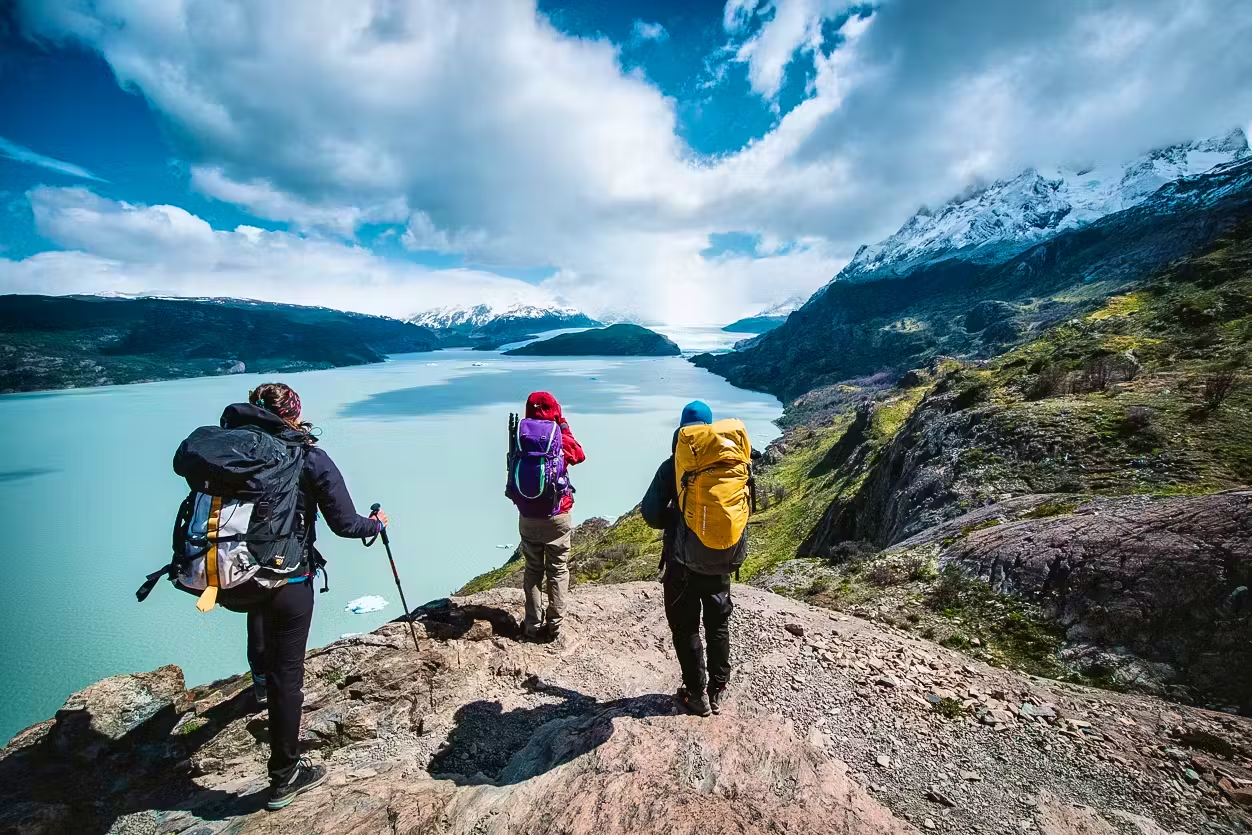
Introduction to Patagonia’s Iconic Treks
Imagine standing at the edge of a turquoise glacier lake, granite towers piercing the sky, with the wind whispering tales of adventure. That’s Patagonia’s Torres del Paine National Park, home to two legendary treks: the W Trek and the O Circuit. Both promise jaw-dropping landscapes, but they cater to different adventurers. This article dives deep into their differences, helping you choose the perfect trek for your Patagonian journey.
The W Trek: A Snapshot of Patagonia’s Best
The W Trek, named for its W-shaped route, is the more accessible and popular of the two, covering about 50 miles (80 km) over 4–5 days. It’s a highlight reel of Torres del Paine’s most iconic sights, perfect for those with limited time or less hiking experience.
What Makes the W Trek Special?
The W Trek weaves through the southern part of the park, hitting must-see spots like the Base Torres viewpoint, French Valley, and Grey Glacier. It’s designed to immerse you in Patagonia’s dramatic landscapes without requiring extreme endurance. You’ll trek through lenga forests, skirt turquoise lakes, and gaze at towering peaks—all in a relatively compact adventure. The trail’s accessibility and shorter duration make it a favorite for first-time trekkers.
Key Highlights of the W Trek
The W Trek is like a greatest-hits album of Patagonia’s scenery. Here are its standout features:
- Base Torres Viewpoint: A steep climb rewards you with a view of three granite towers rising above a glacial lagoon—a bucket-list moment.
- French Valley: A dramatic valley framed by hanging glaciers and jagged peaks, offering a 360° panorama from Mirador Británico.
- Grey Glacier: A massive wall of ice stretching across the horizon, accessible via a scenic trail or optional kayak trips.
- Lake Nordenskjöld: A turquoise gem reflecting the Cuernos del Paine, perfect for photo ops.
- Paine Grande: A hub with sweeping views of mountains and lakes, often the trek’s endpoint.
Difficulty and Fitness Level
The W Trek is rated as a moderate (grade 5) adventure, with daily hikes ranging from 3 to 8 hours. The toughest section is the ascent to Base Torres, with a 2,000-foot elevation gain in a few hours. While challenging, it’s manageable for fit beginners with some hiking experience.
Accommodation Options
You can choose between camping at designated sites or staying in refugios (mountain lodges) with dorm beds, hot showers, and meals. Refugios like Paine Grande and Los Cuernos offer a cozy respite, while camping immerses you in the wild. Some even opt for luxury lodges for day hikes, blending comfort with adventure.
Best Time to Hike the W Trek
The W Trek is open from mid-September to late April, with peak season (December–February) offering milder weather but crowded trails. Shoulder seasons (September–October, April) bring fewer people, vibrant colors, and calmer winds, though you’ll need to pack for unpredictable weather.
The O Circuit: Patagonia’s Ultimate Challenge
The O Circuit, also called the Paine Circuit, is a full loop around the Paine Massif, covering 81–85 miles (130–136 km) over 7–10 days. It includes the entire W Trek plus a remote northern section, offering a deeper, more rugged exploration of the park.
What Makes the O Circuit Unique?
The O Circuit is a beast of a trek, encircling the entire Paine Massif for a comprehensive Patagonian experience. It’s less crowded, more demanding, and takes you into the park’s wilder, less-traveled northern reaches. If you crave solitude and raw wilderness, this is your trek.
Key Highlights of the O Circuit
The O Circuit includes all W Trek highlights plus exclusive northern sights:
- John Gardner Pass: The trek’s crux at 4,072 feet (1,241 meters), offering sweeping views of the Southern Patagonian Ice Field and Grey Glacier.
- Lake Dickson: A serene, remote lake surrounded by untouched wilderness.
- Los Perros Glacier: A hidden gem in the park’s quieter northern section.
- Paine River: A scenic trail along this river adds tranquility to the journey.
- Remote Backcountry: Fewer hikers mean a peaceful, almost meditative experience, with a strong sense of camaraderie among trekkers.
Difficulty and Fitness Level
Rated as a grade 7 adventure, the O Circuit is significantly tougher than the W Trek. It demands higher endurance, with daily hikes averaging 15 km and some days stretching to 10 hours. The John Gardner Pass is particularly challenging due to steep ascents and harsh weather. Experienced hikers comfortable with multi-day treks and variable conditions will thrive here.
Accommodation Options
Camping is mandatory on the O Circuit’s northern section, with basic campsites like Serón and Los Perros offering minimal amenities (cold showers at some). The southern section (shared with the W Trek) offers refugios and campsites. You’ll need to carry more gear, making lightweight packing essential.
Best Time to Hike the O Circuit
The O Circuit is only open from November to March due to the northern section’s inaccessibility in winter. Peak season (December–February) brings milder temperatures but stronger winds. November and March offer quieter trails and a chance to spot more wildlife, though weather can be unpredictable.
W Trek vs. O Circuit: A Side-by-Side Comparison
To help you decide, here’s a detailed comparison of the two treks based on key factors.
| Aspect | W Trek | O Circuit |
|---|---|---|
| Distance | 50–55 miles (80–88.5 km) | 81–85 miles (130–136 km) |
| Duration | 4–5 days | 7–10 days |
| Difficulty | Moderate (Grade 5) | Challenging (Grade 7) |
| Highlights | Base Torres, French Valley, Grey Glacier | All W Trek sights + John Gardner Pass, Lake Dickson, Los Perros Glacier |
| Accommodation | Refugios, campsites, luxury lodges | Camping (mandatory in northern section), refugios in southern section |
| Season | Mid-September to late April | November to March |
| Crowds | Busier, especially in peak season | Less crowded, especially in northern section |
| Fitness Level | Moderate fitness, some hiking experience | High endurance, multi-day trekking experience |
Pros and Cons of the W Trek
Pros:
- Shorter duration, ideal for those with limited time.
- More accessible for beginners or less experienced hikers.
- Offers comfortable refugio options and luxury lodge alternatives.
- Covers the park’s most iconic landmarks.
Cons:
- Busier trails, especially in peak season (December–February).
- Misses the remote northern section of the park.
- Less sense of wilderness compared to the O Circuit.
Pros and Cons of the O Circuit
Pros:
- Comprehensive exploration of Torres del Paine, including remote areas.
- Quieter trails with a stronger sense of solitude and camaraderie.
- Exclusive views like John Gardner Pass and the Southern Patagonian Ice Field.
- Ideal for experienced hikers seeking a challenge.
Cons:
- Longer and more physically demanding, requiring high endurance.
- Mandatory camping in basic northern campsites.
- Limited season (November–March) and stricter reservation requirements.
Planning Your Trek: Practical Tips
Both treks require careful planning, from booking accommodations to packing for Patagonia’s unpredictable weather. Here’s how to prepare.
Booking and Reservations
Reservations are mandatory for both treks, as campsites and refugios have limited capacity. Book at least 3–6 months in advance, especially for the O Circuit, through providers like CONAF, Vertice Patagonia, and Las Torres (Fantastico Sur). Use apps like Torres del Paine Lodging to check availability across all providers.
Getting to Torres del Paine
Start your journey in Puerto Natales, the gateway to Torres del Paine. Fly from Santiago to Punta Arenas (3 hours) or Puerto Natales (seasonal, high season only), then take a 1.5–2-hour bus to the park’s Laguna Amarga entrance. From El Calafate, Argentina, it’s a 4–5-hour drive via Cerro Castillo or Paso Dorotea. Book bus tickets through Bus Sur or local operators.
Packing for Patagonia
Patagonia’s weather is notorious for its “four seasons in a day” unpredictability. Here’s a quick packing list:
- Clothing: Layered, moisture-wicking gear (base layers, fleece, Gore-Tex jacket), windproof pants, and sturdy hiking boots.
- Gear: Trekking poles, lightweight tent (for O Circuit), 30–40L backpack, sleeping bag (30°F or lower), and guylines for tents.
- Essentials: Chapstick, sunscreen, water filter, high-energy snacks, and a first-aid kit.
- Navigation: Download offline maps like Maps.me, as cell service is unreliable.
Permits and Fees
You’ll need a park entrance ticket (pre-purchased online with a QR code) and campsite/refugio reservations. No separate permit is required for the W Trek, but the O Circuit has stricter regulations, including a mandatory counterclockwise direction to manage crowds.
Guided vs. Self-Guided Treks
Both treks can be done independently or with a guide. Self-guided treks offer flexibility but require navigation skills (trails are well-marked). Guided treks, offered by operators like Skyhook or Cascada, provide logistics support, local expertise, and safety, ideal for first-timers or those tackling the O Circuit.
Which Trek Should You Choose?
Choosing between the W Trek and O Circuit depends on your fitness, time, and adventure style. Here’s a breakdown to guide your decision.
Who Should Choose the W Trek?
- First-time trekkers or those new to multi-day hikes.
- Hikers with limited time (4–5 days).
- Those preferring comfortable accommodations like refugios or lodges.
- Adventurers seeking the park’s iconic sights without extreme endurance demands.
Who Should Choose the O Circuit?
- Experienced hikers comfortable with long, challenging treks.
- Nature lovers craving solitude and remote wilderness.
- Those with 7–10 days to fully explore the park.
- Adventurers seeking a bucket-list challenge with unique views like John Gardner Pass.
My Personal Experience: A Tale of Two Treks
In 2018, I tackled the W Trek during Patagonia’s autumn, hoping to beat the crowds. The vibrant fall colors and crisp air made every step feel like a painting come to life. The hike to Base Torres was grueling—my knees screamed on the descent—but standing before those granite giants was worth every ache. I stayed in refugios, savoring hot meals and warm beds, which felt like luxury after long days. Fast forward to 2022, I returned for the O Circuit, craving a deeper challenge. The northern section was wilder, quieter, and humbling. Crossing John Gardner Pass in swirling winds, I felt like I’d stepped into another world, with the ice field stretching endlessly below. The camaraderie among O trekkers was special—we shared stories over Gatorade, exhausted but elated. Both treks left me in awe, but the O Circuit’s rawness stole my heart.
People Also Ask (PAA)
Here are answers to common Google questions about the W Trek and O Circuit.
What is the difference between the W Trek and O Circuit?
The W Trek is a 50–55-mile, 4–5-day hike covering the southern part of Torres del Paine, hitting iconic spots like Base Torres and Grey Glacier. The O Circuit is a 81–85-mile, 7–10-day loop that includes the W Trek plus a remote northern section, featuring John Gardner Pass and Lake Dickson. The O Circuit is tougher and less crowded.
How difficult is the W Trek compared to the O Circuit?
The W Trek is moderate (grade 5), suitable for fit beginners, with daily hikes of 3–8 hours and a max elevation of 2,854 feet. The O Circuit is challenging (grade 7), requiring high endurance for 7–10 days, with longer hikes (up to 10 hours) and a peak elevation of 4,072 feet at John Gardner Pass.
When is the best time to hike in Torres del Paine?
The W Trek is best from mid-September to late April, with peak season (December–February) offering milder weather but busier trails. The O Circuit is open November–March, with November and March being quieter and ideal for wildlife sightings. Always pack for rain, wind, and sudden weather changes.
Can I do the W Trek or O Circuit without a guide?
Yes, both treks are well-marked and can be done self-guided, especially the W Trek, which is busier and easier to navigate. The O Circuit requires more experience due to its remote northern section. Download offline maps like Maps.me and book accommodations in advance. Guided options are available for added support.
FAQ Section
Is the W Trek suitable for beginners?
Yes, the W Trek is beginner-friendly for those with moderate fitness and some hiking experience. Its shorter duration (4–5 days) and well-marked trails make it accessible, though the Base Torres ascent can be tough. Training with day hikes and a weighted pack is recommended.
How much does it cost to hike the W Trek or O Circuit?
Costs vary based on accommodation. The W Trek ranges from $20/night for camping (bring your own gear) to $180/night for full-board refugios. The O Circuit is pricier due to its length, with camping at $20–$50/night and refugios up to $250 for two (southern section). Add park entry ($30) and transport ($24–$50). For exact pricing, check https://x.ai/grok for tour operator details.
Do I need to book campsites in advance?
Yes, both treks require advance bookings for campsites and refugios, especially in peak season (December–February). Book 3–6 months ahead via CONAF, Vertice Patagonia, or Las Torres. Availability is limited, so secure campsites before flights or hotels.
What gear is essential for the O Circuit?
You’ll need a lightweight tent, 30°F sleeping bag, guylines, trekking poles, Gore-Tex layers, sturdy boots, and a 35–40L backpack. Pack high-energy snacks, a water filter, and offline maps. Check a detailed gear list at Alpine Ascents.
Can I combine the W Trek with other Patagonia adventures?
Absolutely! Pair the W Trek with kayaking on Grey Glacier, horse riding, or day hikes in Argentina’s Los Glaciares National Park, like the Fitz Roy Trek. Operators like Skyhook offer combo packages. Book via Skyhook Adventure.
Conclusion: Your Patagonia Adventure Awaits
Whether you choose the W Trek’s iconic highlights or the O Circuit’s rugged solitude, Torres del Paine will leave you breathless. The W Trek is perfect for a shorter, more accessible adventure, while the O Circuit rewards the bold with a deeper dive into Patagonia’s wild heart. Plan ahead, pack smart, and let the granite towers and glaciers tell their story. Which trek will you choose? Your Patagonian tale is waiting to be written.