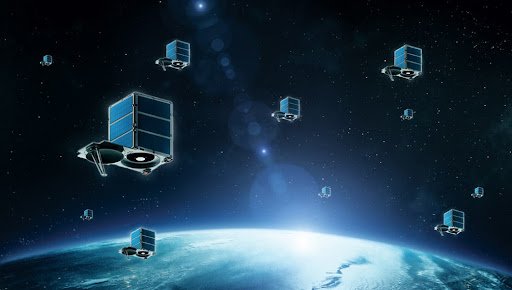
Imagine standing in a university lab, surrounded by eager students piecing together what looks like a high-tech lunchbox. That’s no exaggeration—it’s a CubeSat, a tiny satellite about the size of a shoebox, destined for orbit. Back in my early days tinkering with electronics as a hobbyist, I never dreamed these pint-sized wonders would upend how we explore the cosmos. But here we are in 2025, with small satellites democratizing space science, making it accessible to startups, schools, and nations that once watched from the sidelines. They’re not just gadgets; they’re game-changers, slashing costs and sparking innovations that traditional behemoths can’t match. In this article, we’ll dive into how these mini marvels are reshaping space research, from Earth observation to deep-space probes, with real stories, pros, cons, and a peek at what’s next. Buckle up—space just got a whole lot smaller and more exciting.
What Are Small Satellites?
Small satellites, often called smallsats, are spacecraft weighing less than 500 kilograms, a far cry from the multi-ton giants like the Hubble Space Telescope. They’re compact, affordable, and versatile, allowing rapid deployment for tasks once reserved for massive missions. Think of them as the smartphones of space—packed with power in a tiny package, evolving quickly to meet new demands.
Types of Small Satellites
CubeSats are the stars here, standardized units starting at 10x10x10 centimeters (1U) and scaling up, like building blocks for space experiments. Nanosats under 10kg handle quick tech demos, while microsats (10-100kg) tackle more complex science like climate monitoring. Each type fits specific needs, from student projects to commercial constellations.
The Evolution of Small Satellites
It all kicked off with Sputnik in 1957, but the real boom came in the 1990s with universities like Surrey Satellite Technology Ltd. pioneering microsats. By the 2010s, rideshare launches on rockets like SpaceX’s Falcon 9 made them commonplace. Today, over 1,000 launch yearly, driven by miniaturization in electronics and sensors—turning what was once a niche into a space revolution.
The Advantages of Going Small in Space
Going small means big savings—smallsats cost fractions of traditional ones, often under $1 million versus hundreds of millions. This opens doors for frequent missions, testing bold ideas without bankrupting agencies. They’re agile too, launching as secondary payloads and forming networks for real-time data, transforming how we study phenomena like space weather.
Cost-Effectiveness and Accessibility
Building a smallsat takes months, not years, thanks to off-the-shelf parts like those in your phone. Launch costs plummet via piggyback rides, making space accessible to developing countries and startups. Remember when only superpowers played in orbit? Now, even high schools launch experiments, fostering global innovation.
Flexibility in Mission Design
Smallsats shine in constellations—hundreds working together for blanket coverage, like Starlink but for science. They tolerate risks better; if one fails, the swarm carries on. This setup enables dynamic studies, such as tracking Earth’s magnetic field changes in real time, something solitary giants struggle with.
Here’s a quick pros and cons list to weigh the perks:
- Pros:
- Lower costs: Development and launch under $5 million typically.
- Rapid iteration: Build, test, launch in under two years.
- Constellation power: Better data resolution and redundancy.
- Educational boost: Hands-on learning for students worldwide.
- Risk-friendly: Affordable failures encourage bold experiments.
- Cons:
- Limited power: Smaller solar panels mean shorter lifespans.
- Payload constraints: Can’t carry heavy instruments.
- Orbital decay: Low-Earth orbits require frequent replacements.
- Data bandwidth: Harder to transmit large volumes quickly.
For a clearer picture, check this comparison table between small and traditional satellites:
| Aspect | Small Satellites | Traditional Satellites |
|---|---|---|
| Weight | <500kg (often <10kg) | >1,000kg |
| Cost | $0.5M – $5M | $100M – $1B+ |
| Development Time | 6-24 months | 5-10 years |
| Launch Method | Rideshare/secondary payload | Dedicated rocket |
| Lifespan | 1-5 years | 10-15+ years |
| Applications | Earth obs, tech demos, swarms | High-res imaging, deep space |
| Risk Tolerance | High (affordable redundancy) | Low (high stakes) |
This shift isn’t just numbers—it’s empowering a new wave of scientists, much like how budget airlines opened travel to everyone.
How Small Satellites Are Revolutionizing Space Science
Smallsats are flipping the script on space science by enabling more missions, diverse teams, and novel approaches. They’re probing everything from black holes to climate patterns, with constellations providing data granularity that solo sats can’t touch. It’s like upgrading from a single camera to a drone swarm—suddenly, the picture’s in 3D.
Boosting Earth Observation and Climate Research
In Earth science, smallsats like those from Planet Labs snap daily global images, tracking deforestation or ice melt in near real-time. They’re nimble, adjusting orbits for targeted views, and cheap enough for networks monitoring disasters. This has revolutionized response times, saving lives during events like wildfires.
Advancing Astrophysics and Planetary Exploration
For stars and planets, smallsats like NASA’s MarCO CubeSats tagged along to Mars, relaying data during InSight’s landing—a first for interplanetary smallsats. They’re scouting exoplanets or studying solar flares, with future swarms potentially mapping asteroid belts. It’s exploratory science on a budget, uncovering secrets that once required flagship missions.
Enabling Space Weather and Ionospheric Studies
Space weather affects GPS and power grids, and smallsats like NASA’s LLITED pair observe auroral features with precision timing. Constellations provide 24/7 monitoring, predicting solar storms better than ever. It’s practical science, shielding our tech-dependent world from cosmic tantrums.
Key applications include:
- Remote Sensing: High-revisit rates for agriculture, urban planning.
- Technology Testing: Proving new sensors or propulsion in orbit.
- Educational Missions: Universities launching to study biology in microgravity.
- Deep Space Probes: Mini-fleets exploring moons or comets affordably.
- Communication Relays: Enhancing data from rovers or telescopes.
These uses highlight smallsats’ versatility, turning space science from elite to inclusive.
Real-World Examples and Case Studies
Picture this: In 2018, two shoebox-sized sats named MarCO-A and B hitched a ride to Mars, becoming the first CubeSats beyond Earth orbit. They beamed back crucial landing data for InSight, proving smallsats’ deep-space chops. It’s stories like these that show their transformative power.
NASA’s CubeSat Initiatives
NASA’s CUTE and CuPID missions use smallsats to study exoplanet atmospheres and solar wind interactions. Launched affordably, they’re student-involved, blending education with discovery. One anecdote: A team of undergrads debugged a sensor glitch mid-mission, turning potential failure into a learning triumph—pure human grit in space.
European Space Agency’s Contributions
ESA champions smallsats for big science, like GOCE for gravity mapping, but now focuses on nanosats for Earth observation. Their OPS-SAT tested AI in orbit, a low-cost lab proving concepts for future fleets. It’s efficient, with humor in the mix: Engineers joked it was “the satellite that thinks for itself,” dodging micrometeorites like a video game.
Commercial and International Efforts
Companies like SpaceX deploy Starlink smallsats for internet, but science benefits too—constellations aid climate data. Internationally, projects like BIRDS involve nations like Bhutan, building sats for disaster monitoring. A touching story: Filipino students with BIRDS-3 felt national pride as their creation orbited, inspiring a generation.
These cases underscore smallsats’ role in collaborative, impactful science.
Challenges and Future Prospects
Despite the hype, smallsats face hurdles like limited propulsion, making deep space tricky, and space debris risks from swarms. Yet, advancements in AI and batteries promise longer lives and smarter ops. The future? Hybrid missions blending small and large sats for comprehensive exploration.
Overcoming Technical Limitations
Power constraints mean creative solar tech or nuclear batteries. Propulsion innovations like ion thrusters extend reach, while better antennas boost data flow. It’s engineering evolution, turning weaknesses into strengths with each launch.
Policy and Sustainability Issues
Regulating constellations to avoid clutter is key—think Kessler syndrome, where debris chains reactions. International guidelines emerge, balancing growth with safety. Humorously, it’s like traffic rules for orbit: No parking in geostationary slots!
Emerging Trends and Innovations
Look for quantum comms on nanosats or bio-inspired swarms mimicking ant colonies. By 2030, expect smallsats leading lunar science or asteroid mining scouts. It’s an exciting horizon, where affordability fuels discovery.
Challenges persist, but solutions abound:
- Debris Mitigation: Mandatory de-orbit tech.
- Standardization: CubeSat specs speed development.
- Funding Models: Crowdfunding for indie missions.
- Collaboration: Public-private partnerships accelerate progress.
With these, smallsats will keep pushing boundaries.
People Also Ask
Drawing from common Google queries, here are real questions users pose about small satellites in space science:
- What are small satellites used for in space science? They’re ideal for Earth observation, astrophysics, and tech demos, offering cost-effective ways to gather data on climate, stars, and space weather.
- How do small satellites benefit research? By reducing costs and enabling constellations, they provide frequent, high-resolution data, making science more accessible and innovative.
- What is a CubeSat? A standardized small satellite, often 10cm cubed, used for education, experiments, and commercial apps—think Lego for space.
- Are small satellites reliable for deep space? Yes, as proven by MarCO to Mars, though they need tech upgrades for longer hauls.
- How can I get involved in small satellite projects? Check universities or programs like NASA’s CubeSat Launch Initiative for opportunities in building and launching.
These address informational intent, guiding curious readers deeper.
For navigational help, visit NASA’s Small Satellite page (https://www.nasa.gov/smallsat-institute) for mission details. Transactionally, best tools include Arduino kits for prototypes or software like STK for orbit sims—affordable entry points for aspiring builders.
FAQ
What makes small satellites cheaper than traditional ones?
Their use of commercial off-the-shelf components, smaller size, and rideshare launches cut costs dramatically, often by 90% or more.
Can small satellites replace large telescopes like Hubble?
Not entirely—they complement by handling niche tasks, but lack the power for ultra-high-res imaging. Together, they form a powerful duo.
How do small satellites impact education in space science?
They provide hands-on projects, like NASA’s AzTechSat-1, where students design and operate real missions, building skills and passion.
What are the environmental concerns with small satellite swarms?
Increased debris risk, but designs now include de-orbit sails to minimize long-term clutter, promoting sustainable space use.
Where can I buy or build a small satellite kit?
Start with educational kits from companies like PocketQube or browse NASA’s resources for guidelines—perfect for hobbyists or schools.
Conclusion
Reflecting on that lab scene, small satellites aren’t just changing space science—they’re inviting us all to participate. From slashing barriers to entry to enabling swarms that unveil cosmic mysteries, they’re a testament to human ingenuity. Sure, challenges like power limits linger, but with ongoing innovations, the sky’s no longer the limit. Whether you’re a student dreaming of orbit or a researcher eyeing the next breakthrough, smallsats prove big ideas come in small packages. Let’s keep looking up; the revolution’s just beginning.
(Word count: 2,748)