Bodybuilding is more than just lifting weights and flexing muscles on stage. It’s a sport of precision, aesthetics, and discipline, with various divisions catering to different physiques, goals, and levels of muscularity. If you’ve ever watched a bodybuilding competition or considered stepping on stage yourself, you might have felt overwhelmed by terms like Men’s Physique, Classic Physique, Women’s Wellness, or Bikini. Each division has its own rules, judging criteria, and vibe. As someone who’s been around the gym for years and coached a few friends through their first shows, I can tell you that choosing the right division is like picking the perfect pair of shoes—it’s got to fit your style and goals. In this article, we’ll break down the key physique divisions for men and women, compare their requirements, and help you decide which one might be your stage to shine. Let’s dive in!
Men’s Bodybuilding Divisions
Men’s Open Bodybuilding
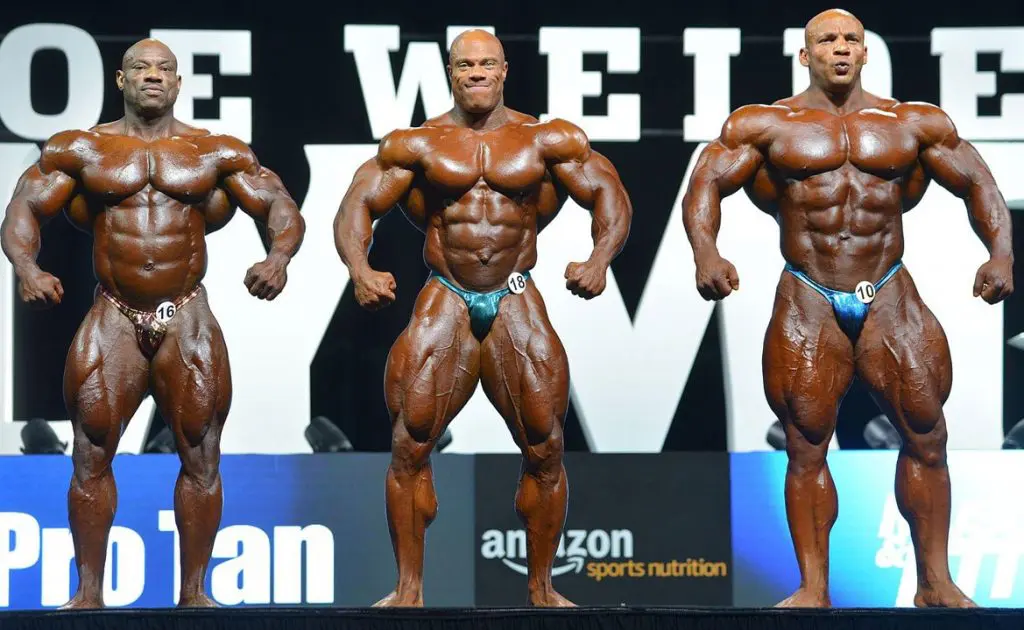
Men’s Open Bodybuilding is the division most people picture when they think of bodybuilding. It’s the realm of massive, shredded physiques, where size, conditioning, and symmetry reign supreme. Competitors like Ronnie Coleman and Jay Cutler have defined this category with their jaw-dropping muscle mass. This division has no weight or height restrictions, making it a showcase of the biggest and most conditioned athletes.
- Judging Criteria: Judges focus on muscularity, symmetry, conditioning, and posing. Competitors must hit eight mandatory poses, including the double biceps and most muscular, to display their development. Body fat is typically around 4%, revealing deep striations and vascularity.
- Attire: Posing trunks that highlight the entire physique.
- Who It’s For: Athletes aiming for maximum muscle mass and extreme leanness.
212 Bodybuilding
Introduced in 2011, the 212 division is for shorter or smaller-framed bodybuilders who can’t compete with the giants in Open Bodybuilding. Competitors must weigh 212 pounds or less, with no height restrictions since 2016. Think of it as a slightly scaled-down version of Open, still emphasizing extreme muscularity but with a more compact frame.
- Judging Criteria: Same as Open Bodybuilding—muscularity, symmetry, and conditioning—but with a focus on proportionality for smaller frames. Eight mandatory poses are required.
- Attire: Posing trunks, similar to Open Bodybuilding.
- Who It’s For: Shorter athletes or those with less overall mass but still aiming for a shredded, vascular look.
Classic Physique
Classic Physique, launched in 2016, is a nod to the Golden Era of bodybuilding, inspired by legends like Arnold Schwarzenegger and Frank Zane. It emphasizes aesthetics, symmetry, and a smaller waist over sheer size. Competitors are judged on a balanced, proportional physique with weight limits based on height.
- Judging Criteria: Focus on symmetry, proportion, and conditioning. Five mandatory poses (including the vacuum pose) highlight a tapered torso and classic lines. Body fat is low but not as extreme as Open.
- Attire: Black boxer briefs or posing trunks to show off leg development.
- Who It’s For: Athletes who prioritize aesthetics and a streamlined, artistic physique.
Men’s Physique
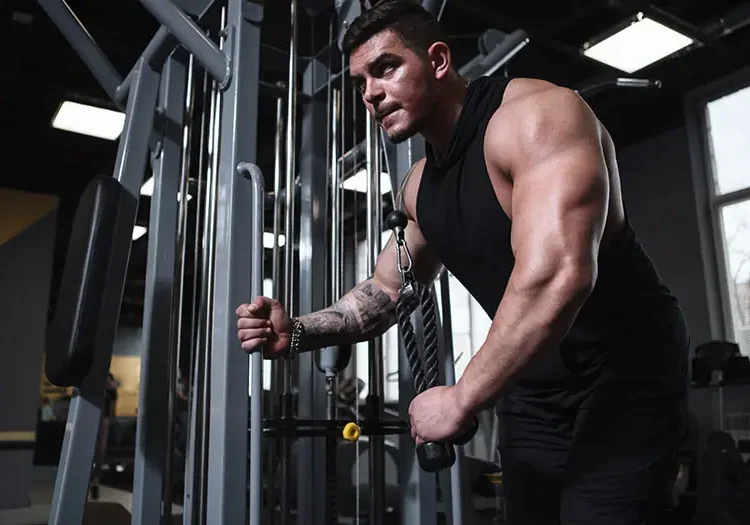
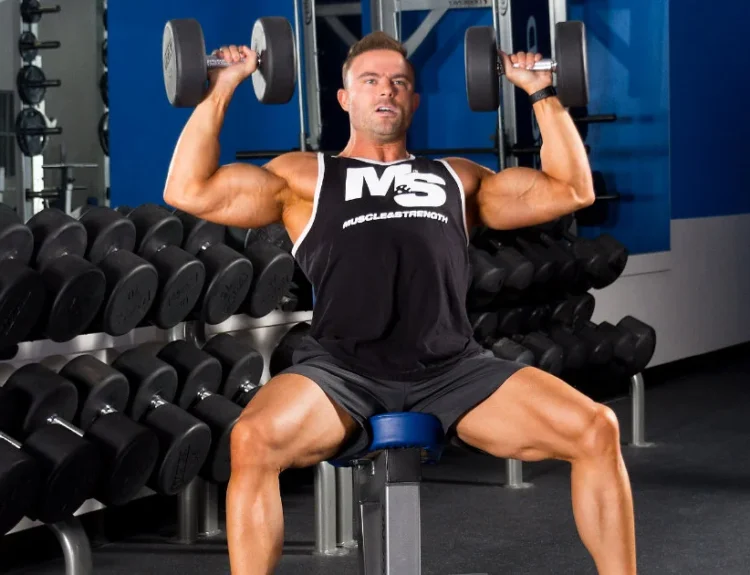
Men’s Physique, introduced in 2012, is all about the “beach body” look—lean, athletic, and marketable. It’s less about extreme muscle mass and more about a balanced, aesthetically pleasing upper body. Competitors wear board shorts, so legs aren’t judged, making it a great entry point for newcomers.
- Judging Criteria: Judges look for muscularity, symmetry, and stage presence through quarter turns, not traditional bodybuilding poses. Emphasis is on the upper body, with a small waist and V-taper.
- Attire: Board shorts covering the thighs.
- Who It’s For: Those seeking a less intense prep with a focus on upper body aesthetics.
Women’s Bodybuilding Divisions
Women’s Bodybuilding
Women’s Bodybuilding is the female counterpart to Men’s Open, focusing on maximum muscle mass, symmetry, and conditioning. It’s less popular today due to its extreme muscularity requirements, but it remains a respected division for women who want to push their physiques to the limit.
- Judging Criteria: Judges prioritize muscle size, definition, and symmetry, with 11–13 mandatory poses. Competitors aim for a body fat percentage around 8%, showing clear striations.
- Attire: Two-piece posing suit, barefoot.
- Who It’s For: Women aiming for significant muscle mass and a highly defined physique.
Women’s Physique
Women’s Physique bridges the gap between Women’s Bodybuilding and Figure. It emphasizes muscularity and symmetry but avoids the extreme size of bodybuilding. Competitors showcase a feminine yet athletic physique with balanced proportions.
- Judging Criteria: Judges assess muscle symmetry, size, and stage presence through mandatory poses. Competitors should be lean but not “shredded” like bodybuilders. Posing routines are key.
- Attire: Two-piece posing suit, barefoot.
- Who It’s For: Women with moderate muscle mass who want to highlight symmetry and femininity.
Figure
The Figure division is about a balanced, feminine physique with more muscle than Bikini but less than Physique. It’s perfect for women who want to show off a sculpted, athletic look without extreme muscularity.
- Judging Criteria: Judges look for broader shoulders, a small waist, and a V-taper, with muscle separation but no visible striations. Competitors perform quarter turns and an individual routine.
- Attire: Two-piece bikini with heels.
- Who It’s For: Women with a naturally athletic build and moderate muscle definition.
Bikini
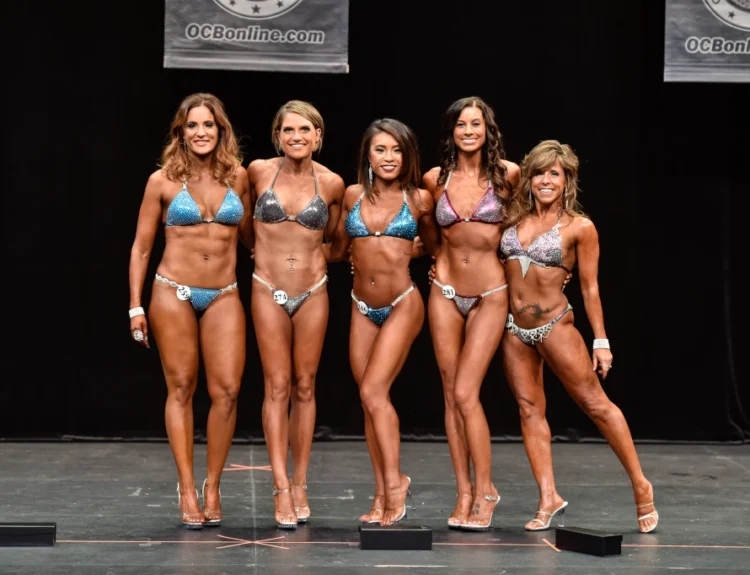
Bikini is the most popular women’s division, appealing to those with a toned, curvy physique and less muscularity. It emphasizes elegance, marketability, and a feminine hourglass figure, making it accessible to a wide range of competitors.
- Judging Criteria: Judges prioritize proportion, symmetry, and a toned physique with a body fat range of 10–12%. Competitors perform quarter turns and a model walk, focusing on stage presence.
- Attire: Two-piece bikini with heels.
- Who It’s For: Women seeking a lean, marketable look with minimal muscle mass.
Wellness
Introduced in 2019, the Wellness division is designed for women with a strong lower body—think glutes, quads, and hamstrings—but less upper body development. It’s a blend of Bikini and Figure, with a focus on a healthy, proportionate physique.
- Judging Criteria: Judges look for a muscular lower body, balanced proportions, and conditioning similar to Bikini. Competitors perform quarter turns and a model walk.
- Attire: Two-piece bikini with heels.
- Who It’s For: Women with a strong lower body and a less developed upper body.
Fitness
The Fitness division combines physique with performance, requiring competitors to showcase both their athletic build and a choreographed routine involving acrobatic or gymnastic moves. It’s one of the most demanding divisions due to its dual focus.
- Judging Criteria: Physique accounts for one-third of the score, while the routine (set to music) makes up two-thirds. Judges assess muscular balance, stage presence, and routine execution.
- Attire: Two-piece bikini for judging, costume for the routine.
- Who It’s For: Athletic women who excel in both physique and performance.
Comparison of Men’s Physique Divisions
| Division | Muscularity | Conditioning | Posing | Attire | Focus |
|---|---|---|---|---|---|
| Open Bodybuilding | Extreme | Very low body fat (4%) | 8 mandatory poses | Posing trunks | Maximum size, symmetry, definition |
| 212 Bodybuilding | High | Very low body fat (4%) | 8 mandatory poses | Posing trunks | Compact, proportional muscularity |
| Classic Physique | Moderate | Low body fat (6–8%) | 5 mandatory poses, vacuum | Boxer briefs/posing trunks | Symmetry, aesthetics, proportion |
| Men’s Physique | Moderate | Moderate body fat (8–10%) | Quarter turns | Board shorts | Upper body aesthetics, V-taper |
Pros and Cons of Men’s Divisions
- Open Bodybuilding
- Pros: Highest prize money, prestigious, showcases extreme dedication.
- Cons: Intense prep, high health risks, requires significant muscle mass.
- 212 Bodybuilding
- Pros: More accessible for smaller frames, similar prestige to Open.
- Cons: Still requires extreme conditioning, competitive field.
- Classic Physique
- Pros: Emphasizes aesthetics, less extreme than Open, growing popularity.
- Cons: Strict height/weight ratios, challenging vacuum pose.
- Men’s Physique
- Pros: Easier entry point, less focus on legs, marketable look.
- Cons: Less emphasis on overall physique, highly competitive.
Comparison of Women’s Physique Divisions
| Division | Muscularity | Conditioning | Posing | Attire | Focus |
|---|---|---|---|---|---|
| Women’s Bodybuilding | Extreme | Low body fat (8%) | 11–13 mandatory poses | Two-piece suit, barefoot | Maximum muscle, striations |
| Women’s Physique | High | Low body fat (8–10%) | Mandatory poses, routine | Two-piece suit, barefoot | Symmetry, femininity, muscularity |
| Figure | Moderate | Moderate body fat (8–12%) | Quarter turns, routine | Two-piece bikini, heels | Feminine, athletic build |
| Bikini | Low | Moderate body fat (10–12%) | Quarter turns, model walk | Two-piece bikini, heels | Toned, curvy, marketable |
| Wellness | Moderate (lower body) | Moderate body fat (10–12%) | Quarter turns, model walk | Two-piece bikini, heels | Strong lower body, proportion |
| Fitness | Moderate | Moderate body fat (9–11%) | Quarter turns, routine | Bikini for judging, costume for routine | Physique and performance |
Pros and Cons of Women’s Divisions
- Women’s Bodybuilding
- Pros: Showcases extreme dedication, respected division.
- Cons: Least popular, intense prep, health risks.
- Women’s Physique
- Pros: Balances femininity and muscularity, growing division.
- Cons: Requires precise conditioning, competitive.
- Figure
- Pros: Feminine aesthetic, moderate prep intensity.
- Cons: Strict symmetry requirements, less focus on performance.
- Bikini
- Pros: Most accessible, highly marketable, large competitor pool.
- Cons: Highly competitive, less focus on muscularity.
- Wellness
- Pros: Highlights lower body, accessible for varied body types.
- Cons: Newer division, evolving standards.
- Fitness
- Pros: Showcases athleticism, creative routines.
- Cons: Demanding prep for physique and routine, high skill level.
Choosing the Right Division for You
Picking a division is like choosing a career path—it depends on your body type, goals, and lifestyle. When I helped my friend Sarah prep for her first show, she was torn between Bikini and Wellness. She had killer glutes from years of sprinting but wasn’t sure about the upper body focus of Bikini. After watching YouTube videos of both divisions and chatting with a coach, she chose Wellness and placed third in her first show! Here’s how to decide:
- Assess Your Physique: Look at your natural strengths. Got a strong lower body? Wellness might be your jam. Broad shoulders and a V-taper? Figure or Classic Physique could be a fit.
- Consider Prep Time: Open Bodybuilding and Women’s Bodybuilding require the most intense prep, often 16–20 weeks of strict dieting and training. Bikini and Men’s Physique are more forgiving, typically 12–16 weeks.
- Evaluate Commitment: Fitness demands choreography skills, while Classic Physique requires mastering poses like the vacuum. Be honest about how much time you can dedicate.
- Research Competitions: Check out organizations like the NPC, IFBB, or WBFF. Each has slightly different rules. For example, WBFF emphasizes marketability and beauty, which suits Bikini competitors.
- Talk to a Coach: A good coach can assess your physique and guide you. Look for someone with credentials (e.g., NASM, IFBB Pro) and client testimonials.
Tools and Resources for Aspiring Competitors
To succeed in any division, you’ll need the right tools and support. Here’s a quick rundown:
- Training Programs: Apps like MyFitnessPal or Strong for tracking macros and workouts. Consider hiring a coach for personalized plans.
- Posing Coaches: Essential for divisions like Classic Physique or Fitness, where posing can make or break your score. Look for coaches via NPC or IFBB websites.
- Competition Gear: Invest in quality posing trunks, bikinis, or suits from brands like Angel Competition Bikinis or Suits by Amy.
- Supplements: Protein powders, BCAAs, and pre-workouts from trusted brands like Optimum Nutrition or Legion Athletics can support your prep. Always check for banned substances if competing in natural federations.
- Online Communities: Join forums like Reddit’s r/bodybuilding or follow IFBB Pros on Instagram for inspiration and tips.
For more resources, check out NPC News Online or IFBB Pro League for official rules and competition schedules.
People Also Ask (PAA)
What is the easiest bodybuilding division to start with?
The Men’s Physique and Bikini divisions are often considered the easiest entry points due to their moderate muscularity and conditioning requirements. They focus on aesthetics and don’t require extreme dieting or leg development (for Men’s Physique). Prep time is also shorter, typically 12–16 weeks.
How do judges score bodybuilding competitions?
Judges score based on muscularity, symmetry, conditioning, and stage presence. Each division has specific criteria: Open Bodybuilding prioritizes size, while Classic Physique emphasizes proportion. Posing and presentation are critical across all divisions.
Can you switch between bodybuilding divisions?
Yes, many competitors “crossover” between divisions, especially in the NPC, where you can compete in multiple categories at the same show. For example, a Figure competitor might also enter Wellness if her lower body is strong.
What’s the difference between NPC and IFBB?
The NPC (National Physique Committee) is the amateur division of the IFBB (International Federation of Bodybuilding). NPC competitors aim to earn an IFBB Pro card to compete professionally. Rules and divisions are similar, but IFBB shows are more prestigious.
FAQ Section
How long does it take to prepare for a bodybuilding competition?
Prep time varies by division. Open Bodybuilding and Women’s Bodybuilding may require 16–20 weeks of intense dieting and training, while Bikini and Men’s Physique typically need 12–16 weeks. Fitness competitors may need extra time for routine choreography.
Do you need to be extremely muscular to compete?
Not necessarily. Divisions like Bikini, Wellness, and Men’s Physique prioritize aesthetics and moderate muscularity over extreme size. Women’s Bodybuilding and Open Bodybuilding are the most muscular divisions.
Are there natural bodybuilding divisions?
Yes, organizations like WNBF and INBA host natural competitions, where athletes are drug-tested. Divisions mirror those in non-natural federations (e.g., NPC), but standards may be slightly less extreme due to the absence of performance-enhancing drugs.
How much does it cost to compete in bodybuilding?
Costs include coaching ($100–$300/month), competition fees ($50–$150 per show), posing suits/bikinis ($50–$500), tanning ($100–$200), and travel. Budgeting $1,000–$2,000 for your first show is a safe estimate.
Can beginners compete in bodybuilding?
Absolutely! Novice and True Novice divisions are designed for beginners. Start with Bikini or Men’s Physique for a less intense prep, and work with a coach to ensure you’re stage-ready.
Final Thoughts
Bodybuilding divisions offer something for everyone, whether you’re chasing the massive physique of Open Bodybuilding or the toned, marketable look of Bikini. Each division has its own charm, challenges, and community. When I watched my first NPC show, I was blown away by the diversity—every competitor brought something unique, from the chiseled quads of Classic Physique to the graceful routines of Fitness. The key is to align your physique, goals, and passion with the right division. Research competitions, connect with a coach, and start training. The stage is waiting for you to flex your potential!